Select the channel around the actual operating conditions: water sources, cleaning chemicals, installation depth, outlet capacity, hygiene needs and traffic loads. Confirm these details together before choosing a standard or custom assembly.
Plan drainage around daily operation
Drainage is often treated as a small part of a food processing project, but in daily operation it has a direct impact on cleaning efficiency, floor safety, hygiene and maintenance.
A drainage channel that is too small may struggle during washdown. A poorly selected grating may be difficult to clean or unsuitable for trolley traffic. The wrong stainless steel grade may also lead to unnecessary corrosion problems in demanding environments.
For food factories, central kitchens, seafood processing plants, meat processing facilities and other hygienic areas, drainage should therefore be selected according to the actual operating conditions rather than appearance alone.
1. Start With the Application Area
The first step is to understand where the drainage channel will be installed.
Different areas in the same facility can have very different drainage requirements.
For example:
- Production areas may receive large amounts of washdown water.
- Food preparation areas may contain grease, food particles or organic waste.
- Seafood processing areas may have salt, moisture and aggressive cleaning conditions.
- Cold rooms may require drainage that is easy to clean and resistant to corrosion.
- Loading or service areas may need higher load capacity because of carts or equipment.
Before choosing a channel, identify the type of liquid, cleaning frequency, expected flow and traffic conditions in the installation area.
2. Choose the Right Stainless Steel Grade
Stainless steel is widely used in hygienic drainage because it is durable, easy to clean and suitable for wet environments.
Two common material options are 304 stainless steel and 316 stainless steel.
304 Stainless Steel
304 is suitable for many general commercial and food-processing environments.
It is commonly considered when:
- the environment is mainly fresh water,
- cleaning chemicals are relatively mild,
- chloride exposure is limited,
- and the project requires a balance between performance and cost.
316 Stainless Steel
316 contains molybdenum, which improves resistance to chloride-related corrosion.
It may be more suitable for:
- seafood processing,
- coastal environments,
- areas using stronger cleaning chemicals,
- facilities with higher chloride exposure,
- and demanding hygienic applications.
The material should always be selected according to the actual environment rather than using one grade for every project.
3. Determine the Channel Width and Depth
A common mistake is choosing drainage channels only by length.
Width and depth are equally important because they affect water capacity and cleaning access.
When determining the channel dimensions, consider:
- expected water volume,
- washdown frequency,
- number of water sources,
- floor slope,
- outlet size,
- available installation depth,
- and maintenance requirements.
A shallow channel may be suitable for areas with limited construction depth and relatively small water volume.
However, high-volume processing areas generally require greater drainage capacity.
There is no single channel size that works for every food processing project.
4. Consider the Grating Design
The grating is the part of the drainage system that workers, carts and equipment interact with every day.
The design should therefore be selected according to both hygiene and load conditions.
Common stainless steel grating options may include:
- bar gratings,
- perforated covers,
- anti-slip covers,
- removable covers,
- and custom grating patterns.
For wet production environments, the grating should allow water to enter efficiently while remaining practical for cleaning.
If carts, racks or other equipment regularly pass over the drain, load requirements also need to be considered.
A drainage channel designed only for pedestrian use should not automatically be used in areas with heavier traffic.
5. Make Cleaning and Maintenance Easy
Food processing drainage systems require frequent cleaning.
Complicated internal structures, inaccessible corners and difficult-to-remove covers can increase cleaning time and create unnecessary maintenance problems.
A practical hygienic drainage design should consider:
- removable gratings,
- smooth internal surfaces,
- accessible channels,
- easy-to-clean corners,
- suitable outlet locations,
- and convenient access for regular inspection.
Drainage should be designed as part of the cleaning process, not as an isolated construction component.
6. Check the Outlet Size and Position
The drainage channel and the drainage pipe must work together.
Even a large channel cannot perform properly if the outlet or downstream pipe is undersized.
Important factors include:
- outlet diameter,
- outlet position,
- number of outlets,
- horizontal or vertical outlet configuration,
- pipe diameter,
- and the distance to the main drainage system.
For long drainage channels or areas with high water volume, multiple outlets may sometimes be considered.
The final layout should be evaluated together with the overall drainage system.
7. Think About Floor Slope
Water must be able to reach the drainage channel efficiently.
For this reason, floor slope and channel placement should be planned together.
In food processing facilities, channels are often positioned near:
- production lines,
- washing stations,
- cleaning areas,
- equipment that regularly releases water,
- and areas where water naturally accumulates.
Correct placement can reduce standing water and improve cleaning efficiency.
8. Select the Drain According to Traffic Load
Not every drainage channel requires the same load capacity.
Before selecting the grating and channel structure, determine whether the installation area is used by:
- pedestrians,
- hand carts,
- food racks,
- pallet trucks,
- forklifts,
- or heavier equipment.
A drainage channel in a staff washing area may have very different structural requirements from one installed in a logistics or production zone.
Load requirements should therefore be confirmed early in the design stage.
9. Custom Drainage May Be Necessary
Food processing facilities often have project-specific layouts.
Standard products may not always match the required:
- channel length,
- width,
- depth,
- outlet position,
- outlet diameter,
- corner configuration,
- grating type,
- or installation condition.
In these situations, a custom stainless steel drainage solution can be evaluated based on drawings and project requirements.
Providing clear information at the beginning can significantly improve the accuracy of the proposed solution.
Useful information includes:
- application area,
- total drainage length,
- channel width and depth,
- stainless steel grade,
- outlet size,
- outlet location,
- traffic condition,
- quantity,
- and project drawings.
Final Thoughts
Choosing a stainless steel drainage channel for a food processing facility is not simply a matter of selecting a length and price.
Material, drainage capacity, hygiene, cleaning, outlet design, grating structure and traffic load all influence the final solution.
A well-planned drainage system can make daily cleaning easier, reduce standing water and support a safer and more efficient processing environment.
For new food factory or commercial drainage projects, it is usually better to confirm the operating conditions and layout first, and then select the most suitable drainage structure.
Planning a Food Processing Drainage Project?
If you are evaluating stainless steel drainage channels for a food factory, commercial kitchen, seafood processing plant or other hygienic facility, send us your project requirements or drawings.
We can help review the material, channel dimensions, outlet configuration, grating design and other technical details for your application.
Talk to a drainage specialist →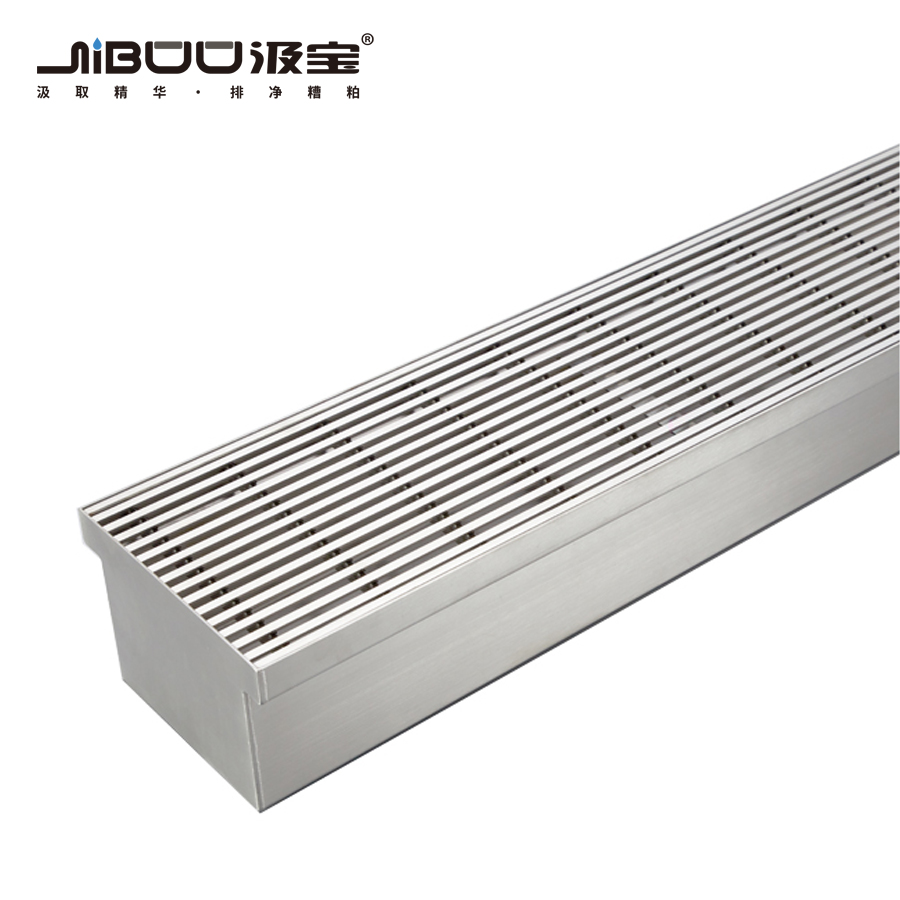
Explore the components mentioned in this guide. The pictured product illustrates a drainage assembly; suitability depends on the project specification.
View product references ↗This guide supports project discussions. Final selection and installation should follow the approved design, the product documentation and applicable local requirements.