How Deep Should a Stainless Steel Drainage Channel Be?
There is no single channel depth that fits every project. The correct depth depends on water volume, available installation space, outlet arrangement, cleaning access and the way the drainage system connects to the floor and pipework.
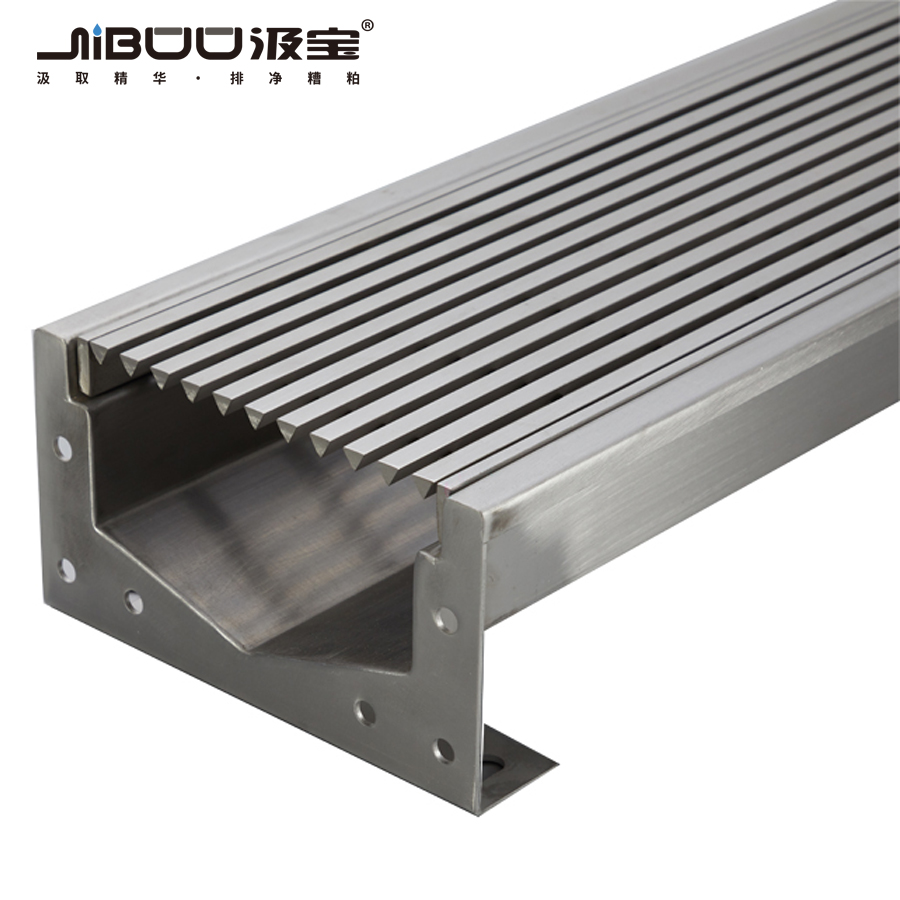
Why channel depth matters
Channel depth affects water capacity, outlet configuration, construction depth, cleaning access and the overall drainage layout. A shallow channel can be useful where floor build-up is limited, but it may create constraints in high-volume or large-outlet applications.
1. Start with expected water volume
A residential shower, a commercial kitchen and a food processing wash-down area can have very different drainage demands. Channel width, depth, length, outlet diameter and downstream pipe capacity should be evaluated together rather than treating depth as an isolated dimension.
2. Check the available installation depth
Renovation projects often have fixed slab levels, waterproofing layers and existing pipes. Before reducing channel depth, confirm that there is still enough space for the channel body, outlet connection, floor slope, waterproofing and surrounding construction.
3. Match the depth to the outlet
Larger outlets require enough physical space for the outlet body and connection. Confirm outlet diameter, outlet direction, position, number of outlets and downstream pipe layout before finalizing the channel profile.
4. Keep cleaning access practical
Commercial and hygienic drainage systems need regular inspection and cleaning. Very narrow or difficult-to-reach internal spaces can make maintenance harder. Removable gratings, accessible internal surfaces and easy outlet access should be considered together with channel depth.
5. Different applications need different layouts
| Application | Depth considerations |
|---|---|
| Bathrooms / residential wet areas | Often limited by floor build-up, waterproofing and outlet position. |
| Balconies / terraces | Rainfall, waterproofing structure and available slab depth matter. |
| Commercial kitchens | Wash-down volume, cleaning access, grease and solids should be reviewed. |
| Food processing | Higher wash-down demand, hygiene and production layout may justify larger channels. |
| Swimming pools | Perimeter length, outlet spacing, flow path and chloride exposure should be considered. |
6. Width and depth work together
A wide shallow channel and a narrow deep channel do not behave the same way. The useful cross-section, outlet arrangement and flow path all matter. Evaluate width + depth + length + outlet size + pipe capacity + floor slope as one system.
Should you always choose a deeper channel?
No. More depth can provide more internal volume, but it also means more excavation, more material and more space below the floor. For low-volume applications, an unnecessarily deep channel may provide little practical benefit.
Information to confirm before selecting depth
- Application and room layout
- Required channel length and width
- Available installation depth
- Expected water volume
- Outlet diameter, position and direction
- Traffic condition and grating requirement
- Material and corrosion exposure
- Project drawings, if available
Final thoughts
The best drainage channel depth is the one that fits the project conditions without creating unnecessary construction or maintenance problems. For commercial and industrial drainage, review the channel, grating, outlet, pipework and floor layout together before confirming dimensions.
Send the application, required dimensions, outlet information and drawings so the drainage layout can be reviewed before fabrication.