7 Common Drainage Channel Design Mistakes in Commercial & Industrial Projects
A stainless steel drainage channel may look like a simple building component, but small design decisions can have a major effect on performance after installation. Standing water, slow drainage, difficult cleaning and repeated maintenance are often caused by the way the complete drainage system was planned.
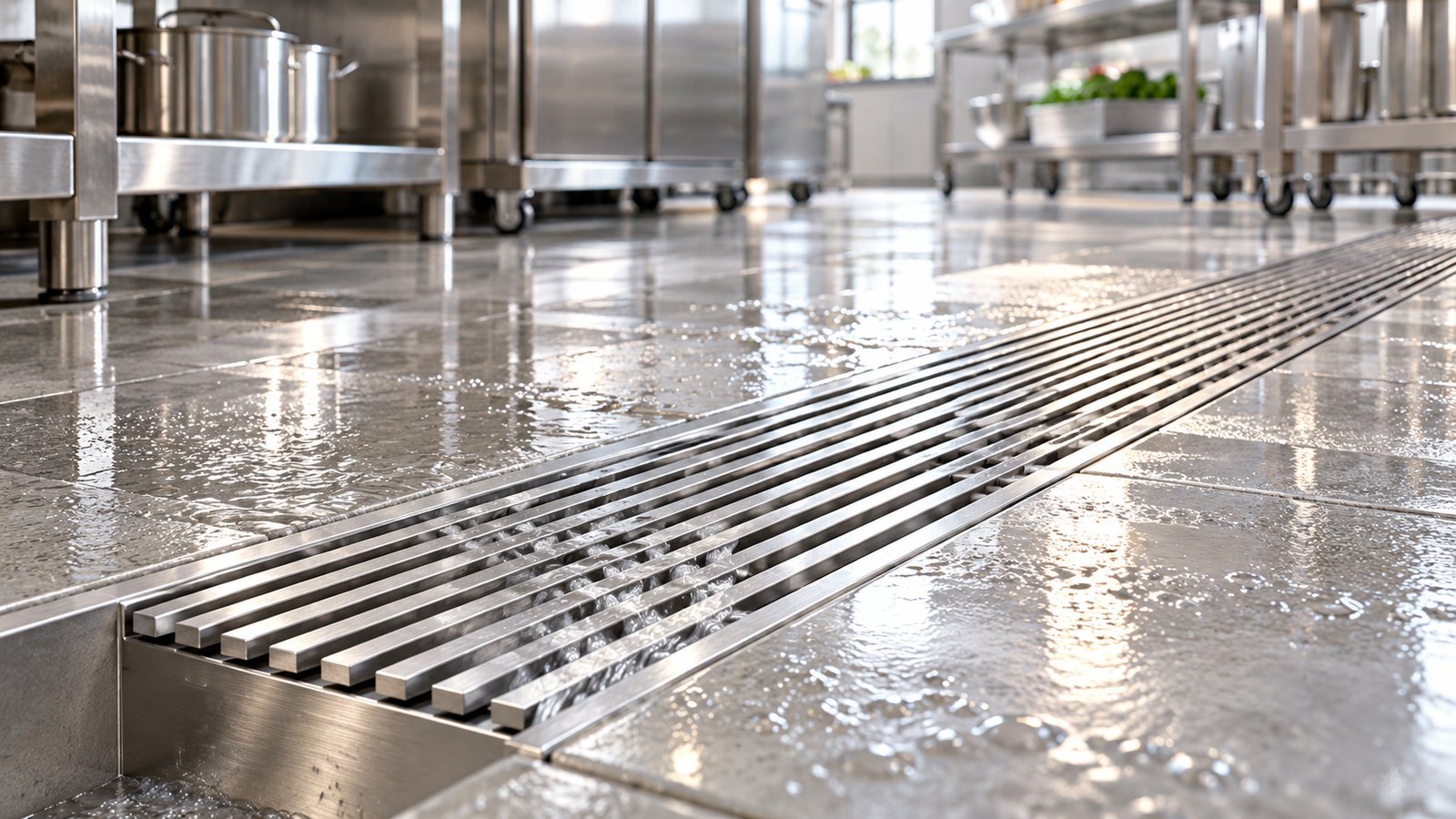
For commercial kitchens, food processing facilities, factories, swimming pool areas and other wet environments, the channel body, floor slope, outlet, grating and downstream pipework need to work together. Below are seven common mistakes to check before production and installation.
1. Selecting the Channel Size Before Understanding the Water Load
One of the most common mistakes is choosing a channel only by length, width or appearance. A buyer may request a 100 mm or 150 mm wide channel without first considering how much water needs to be collected.
Drainage capacity depends on several factors:
- Expected water volume
- Discharge frequency
- Channel width and depth
- Floor slope
- Outlet size and number of outlets
- Downstream pipe capacity
A channel that works well in a hotel bathroom may not be suitable for a food processing washdown area. For high-volume applications, the drainage system should be evaluated according to the operating conditions rather than selecting a standard size first.
2. Ignoring the Floor Slope
Even a large drainage channel cannot perform efficiently if water cannot reach it. The surrounding floor should guide water toward the drainage channel.
If the floor is too flat, incorrectly sloped or divided by uneven surfaces, water may remain in low areas instead of reaching the drain. Standing water can create slower cleaning, slippery surfaces, unnecessary moisture and more difficult sanitation.
Drain placement and floor slope should therefore be planned together. In renovation projects, the existing slab and available installation depth need to be checked carefully.
3. Using an Outlet That Is Too Small
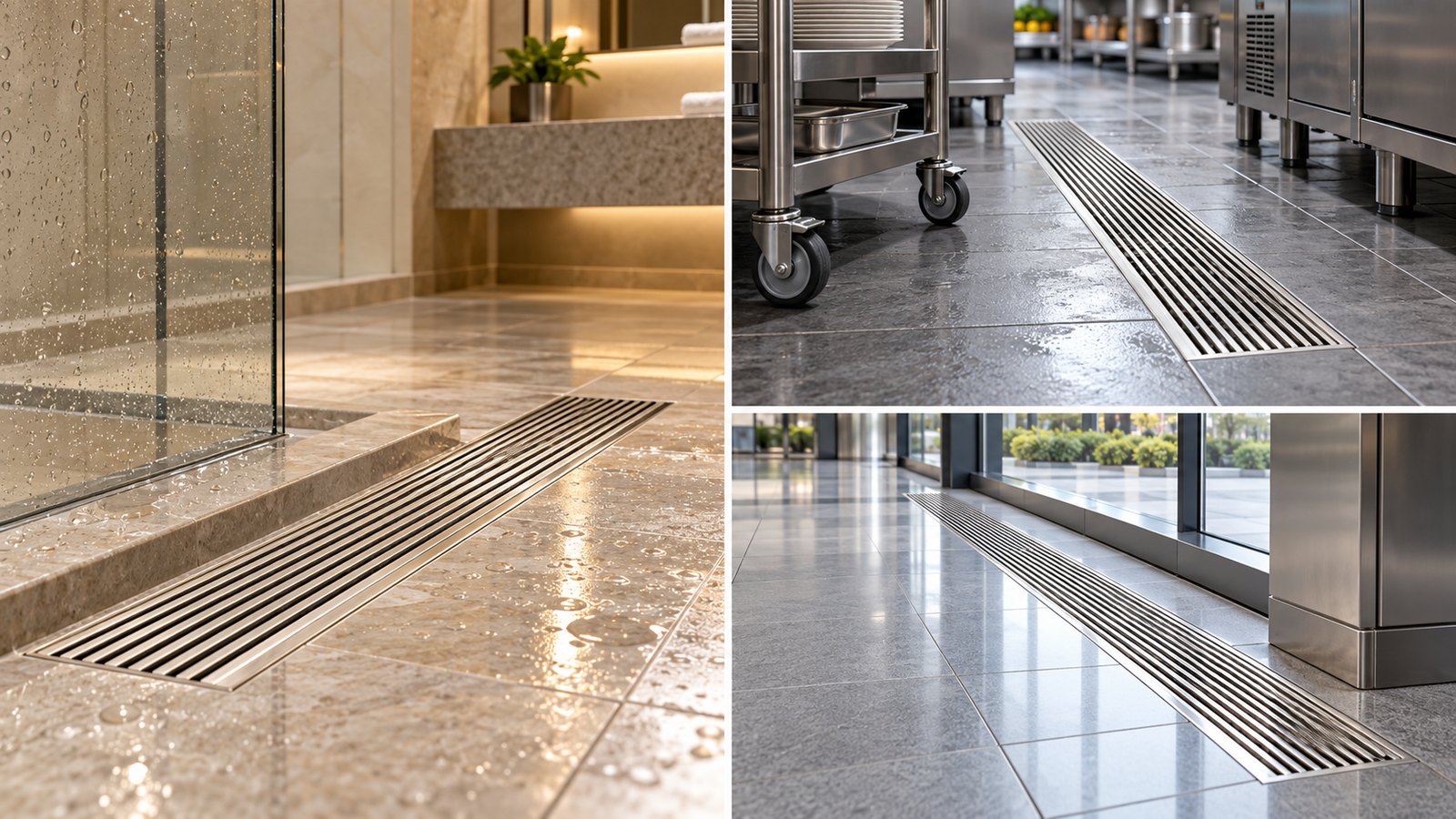
The drainage channel is only one part of the system. Water must eventually leave the channel through an outlet and continue into the drainage pipe.
If the outlet is too small for the expected flow, water can accumulate inside the channel even when the channel itself is large enough. Before confirming the outlet, consider:
- Outlet diameter
- Vertical or horizontal outlet direction
- Number of outlets
- Outlet position
- Channel length
- Downstream pipe size
- Expected flow
Increasing the channel depth alone does not automatically solve an undersized outlet problem.
4. Choosing the Grating Only by Appearance
The grating is the part of the drainage system that interacts directly with workers, carts, cleaning equipment and wastewater. It should not be selected only because it looks attractive.
Important factors include open drainage area, traffic load, slip resistance, opening size, ease of removal, cleaning requirements and application environment.
A decorative cover suitable for a residential bathroom may not be appropriate for an industrial or food processing floor. Likewise, a pedestrian grating should not automatically be used in areas where heavy carts, pallet trucks or other equipment regularly pass over the drain.
5. Making the Drain Difficult to Clean
A drainage system that performs well hydraulically can still become a maintenance problem if it is difficult to access. This is especially important in food factories, commercial kitchens, seafood processing facilities, meat processing areas and other hygienic environments.
A practical drainage system should allow operators to remove the grating and access the internal channel for cleaning. Where debris baskets or strainers are used, they should also be easy to remove and empty.
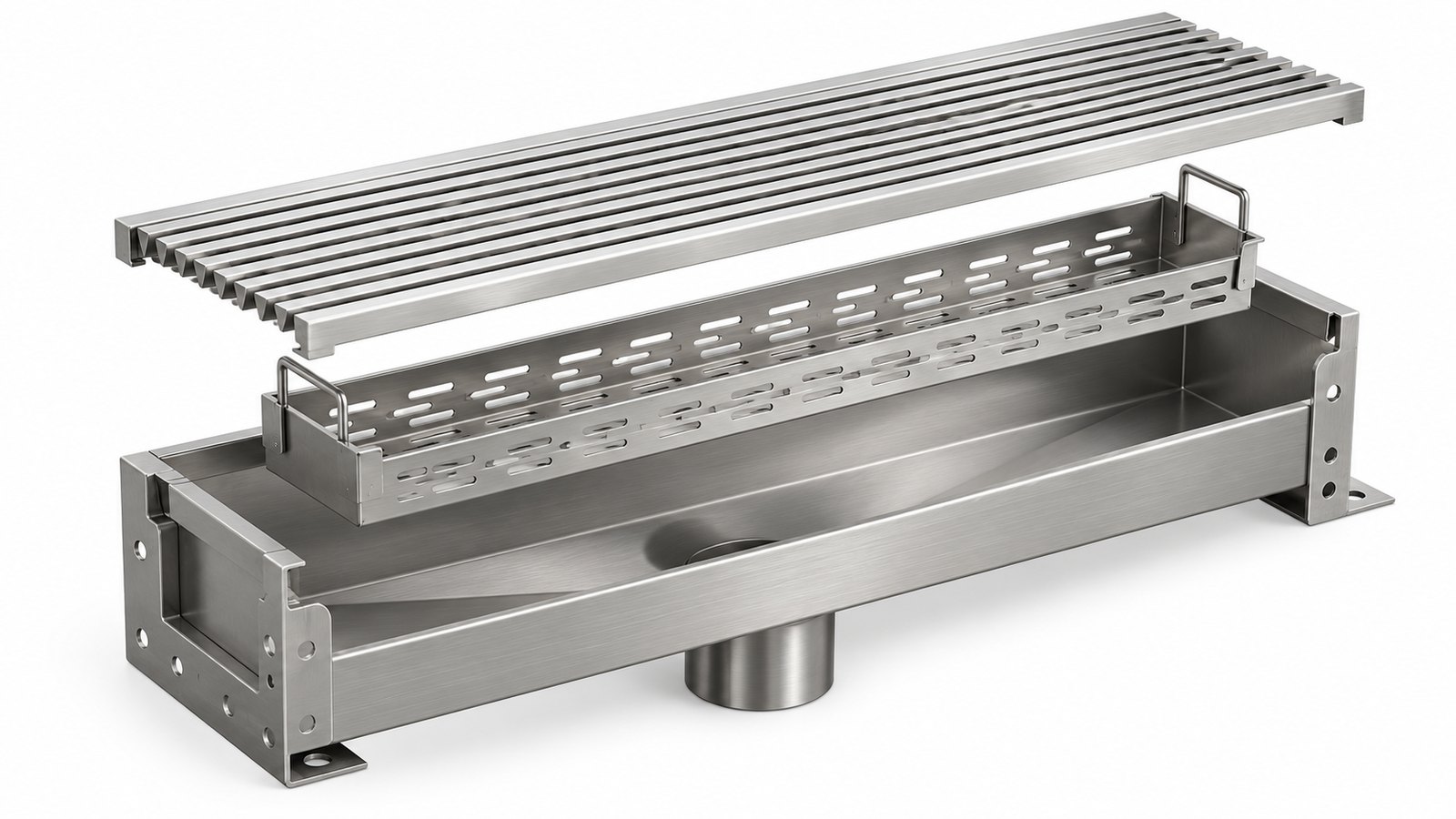
Helpful design features include removable gratings, accessible channel interiors, smooth internal surfaces, accessible outlets and removable debris baskets. Maintenance should be considered during design rather than after installation.
6. Selecting Stainless Steel Without Considering the Environment
304 stainless steel is widely used in many commercial drainage applications, but it is not automatically the best choice for every environment.
Applications with higher chloride exposure or more aggressive environments may require greater corrosion resistance. These can include some coastal projects, seafood processing facilities, certain swimming pool environments and areas using aggressive cleaning chemicals.
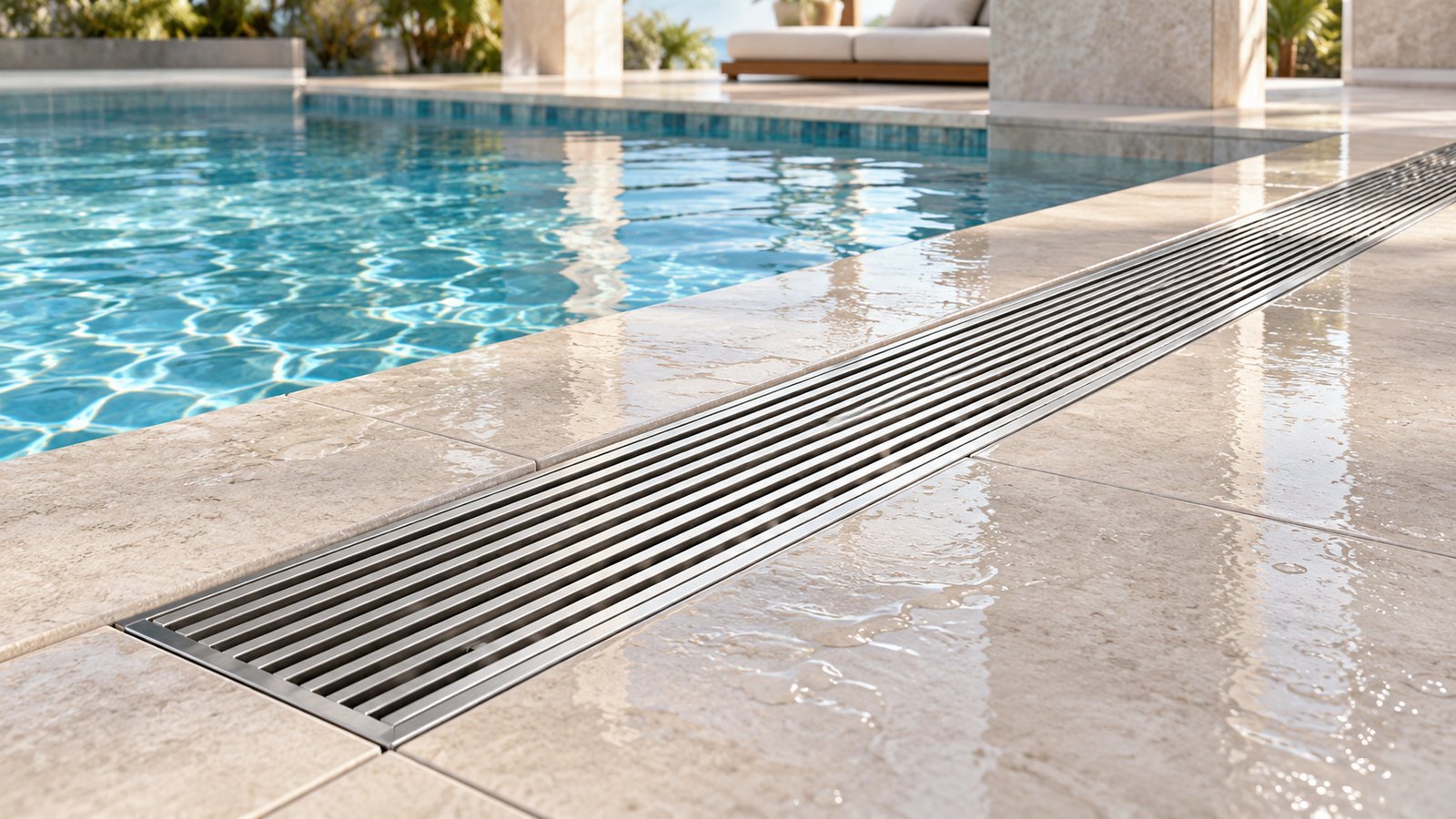
316 or 316L stainless steel may be considered for more demanding environments, while 304 may remain suitable for many general applications. The actual operating environment should be reviewed before material is finalized.
7. Treating the Drainage Channel as an Isolated Product
This is perhaps the most important mistake. A drainage channel does not work independently.
floor → grating → channel → outlet → pipework → main drainage system
If one part of the system becomes a bottleneck, increasing the size of another part may not solve the problem. A large channel with an undersized outlet can still drain slowly. A good channel installed on a poorly sloped floor can still leave standing water. A strong grating installed over an inaccessible channel can still create cleaning difficulties.
Additional Factors to Check Before Production
Application
Confirm where the channel will be installed. Commercial kitchen, food factory, swimming pool, industrial workshop and residential applications can require different designs.
Channel Dimensions
Confirm total length, width, depth, corner configuration and available installation space.
Water Conditions
Consider normal water volume, peak discharge, washdown frequency and whether the water contains grease, food particles or other debris.
Outlet
Confirm outlet diameter, outlet direction, outlet position, number of outlets and connection pipe size.
Traffic Load
Identify whether pedestrians, carts, racks, pallet trucks, vehicles or heavy equipment will pass over the drain.
Cleaning
Determine how the grating, channel and debris basket will be accessed during routine maintenance.
A Simple Pre-Production Checklist
- Is the expected water volume understood?
- Does the floor slope guide water toward the channel?
- Is the outlet large enough for the expected flow?
- Is the grating suitable for the traffic load?
- Can the channel be cleaned easily?
- Is the stainless steel grade suitable for the environment?
- Has the downstream pipework been considered?
- Are the final dimensions confirmed on the project drawing?
If several of these questions are still unclear, it may be better to review the drainage layout before manufacturing begins.
Final Thoughts
Many drainage problems are not caused by one major mistake. They are usually created by several small decisions that were not considered together.
A successful stainless steel drainage system should balance drainage capacity, floor slope, outlet configuration, grating design, material selection, cleaning access and downstream pipework.
For commercial and industrial projects, reviewing these factors before production can reduce installation changes and help the drainage system perform more effectively in daily operation.
Before finalizing a stainless steel drainage channel, prepare the application, dimensions, expected water conditions, outlet requirements, traffic load and available project drawings. A complete set of project information makes it easier to evaluate the drainage layout before production.